The telephone lines in Saudi Arabia are surely thicker and more abundant than elsewhere, since they must bear the heavy weight of all the whispered croonings lovers have to exchange and all their sighs and moans and kisses they cannot, in the real world, enact – or that they do not want to enact due to the restrictions of custom and religion, that some of them truly respect and value.
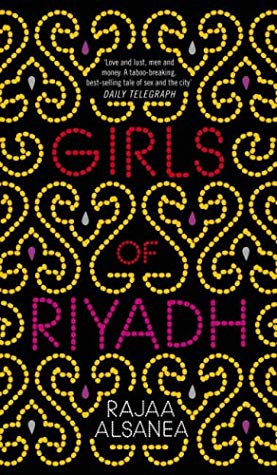
The book is written in email style, where the author sends group emails about the lives of her friends and, before starting each email, she replies to hate messages or comments in general. I was not thrilled by this format, but I think it works for this type of novel which is very casual. That is what I enjoyed the most, that it is was an easy read that surfaces how societal and religious laws deeply affect the lives of women and, in some cases, lead them to face strong consequences and sad endings.
The author writes about her four friends. Gamrah, who starts the novel with a dream wedding, and whose arranged marriage turns out not to be so great. Sadeem, who falls in love the old fashion way, until she gives in a little too much. Michelle a half American that will never truly fit-in in either world. And finally, Lamees, whose life gives readers some hope.
Each chapter, or rather, each email follows an event of one of the friends always expressing how the law works and why the women make certain decisions. Al-Sanea portrays the beliefs of older generations by introducing readers to the women’s mothers, aunties and grandmothers through the advice they give. She also includes a male point of view through the love interests and the fathers, which further shows how and why society works as it does. After finishing the novel, I do recommend it, although it feels catered towards a western public (which it was not), that does not give it less credit when showing the values, religious and political, that reign women’s lives in such “normal” activities such as working, dating and flirting.
About Rajaa al-Sanea
Rajaa al-Sanea was born in Riyadh in 1981. Even though her education was in dentistry, she published this novel in 2005 in Lebanon and in 2007 in English. She translated the novel into English herself. In an interview she states that it was particularly difficult because Arabic is a very literary language and she even used different dialects that were impossible to translate into English, nevertheless she was happy with the outcome.
Other books written by Saudi women
We only recommend books we’ve read
What books do you recommend? Please let us know in the comment section!
Saudi initiatives and projects that support and empower girls and women
Established in 1963, this organization’s mission is to empower Saudi women by making them part of society in leadership roles. Founded by Her Royal Highness Princess Sarah Al-Faisal bin Abd Al Aziz Al Saud, the organization has several projects including giving financial support to families in need, career education, capacity development to create awareness about women empowerment and advocacy-based initiatives to create awareness internationally. During the pandemic, they held various forums about women in Saudi Arabia now available for digital access.
 The Map of Fiction by Women