But idols’ power are no infinite. They cover a place, a particular community and a time. Sammar watched Reputation lose its muscle, its vigour, shrink and frizzle out in this remote corner of the world. When idols fall, the path to the truth is uncluttered, clear. Who saw her, knew her, was with her all the time wherever she went?
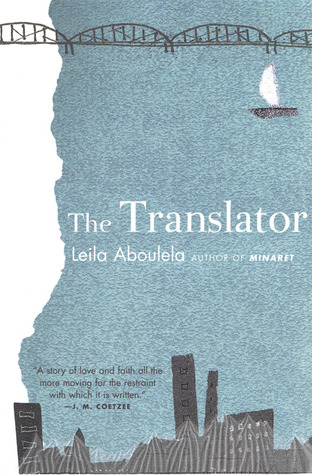
While searching for Sudanese and African women authors, Leila Aboulela’s “The Translator” appeared in many lists of recommendations, so I decided to give it a try. It is a short and powerful novel about Sammar, a Sudanese woman living in Aberdeen, Scotland, working as an Arab translator for the university. She follows a silent, lonely and observant life where her only interactions include those with her work friend and her boss, Rae. Rae is a professor and the Arab expert of the university, albeit he is not Muslim himself. Through Sammar’s daily interaction and schedule, the readers get to know her story: a tragic accident that made her leave her son in Sudan and follow this silent life.
Her relationship with Rae is close and gets even closer as Christmas approaches. Yet in a climatic event, Sammar leaves Aberdeen and goes back to Khartoum with her son, mother-in-law and other family members. It is at this point of the novel that Aboulela shows her impeccable narrative skills. For me, the most valuable part is the cities’ contrasts and how they reflect upon Sammar herself. In Aberdeen, Sammar is very reserved about her religious practices, she has to find almost hidden places to pray and she can feel stranger’s gazes at her, yet in this city everything works – her job, her house, even living comfortably through cold winters. On the contrary, in Khartoum she does not have to hide and her religious practices blend with the rest of the people, yet she has a mediocre job, lives with her mother-in-law (with whom she has a complicated relationship) and city blackouts are the norm. Aboulela shares with us two contrasting cities that reflect two contrasting lives of the same person.
In the end, the novel is about a woman’s commitment to her religion, putting aside her desires and living a rightful life. It is a story about love and devotion to a religion, where patience is our character’s most powerful characteristic. The prose unravels itself throughout each page and in every phone call. Despite its shortness, the characters are well-developed, the cities are thoroughly depicted and as a reader, I did feel close to the characters, especially Sammar and Rae. A recommended short novel about love and religion.
About Leila Aboulela
Leila Aboulela was born in Cairo in 1964, her mother in Egyptian and her father is Sudanese. She grew up and lived in Khartoum until her mid-twenties. She studied Economics and then Statistics in the UK. She started writing in 1992, while living in Aberdeen. Her three novels (“Minaret”, “The Translator” and “The Kindness of Enemies”), all of which include faith and religion as part of the character’s struggles, have been long-listed for the Orange Prize.
Other Books Written by Sudanese Women
We only recommend books we’ve read
What book do you recommend? Please let us know in the comment section!
Sudanese initiatives and projects that support and empower girls and women
Established in 2000, Zedan for Women in Development strives to help Sudanese women in the following dimensions: education and literacy, livelihood and climate change, water and health, and human rights and peace building. Through this multidimensional approach they hope to promote and empower social, economic and political status of vulnerable groups in Sudan with emphasis in women. In their 20 years of existence, they have impacted more than 500,000 Sudanese women and girls from seven different states through more than 40 different programs.
 The Map of Fiction by Women
Thank You!! I will try it this year.
LikeLike