She climbed the ladder and reached the roof where she started shovelling and shovelling and the snow thundered down in front of the house and behind the house and added to the volume of snow down there which she would have to clear later. She spent several hours on the roof in the dark because she owned the house and she cared about the house and wanted to look after it, and when she was almost done, she went down and inside and heated some red wine which she poured into a Thermos flask and brought it with her back up the ladder and sat on the almost snow-cleared roof warming herself on the wine, looking across the neighbourhood and it felt good and serene to view it from above.
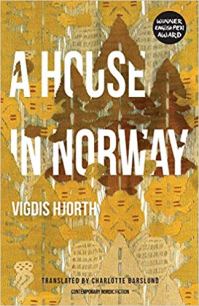 It was such an unexpected joy reading A House in Norway. I didn’t know much about the book; nor about Vigdis Hjorth. But I’m so glad I found it. It reminded me of some of my favorite authors; Margaret Atwood, Carol Shields, Ann Patchett… It is a slow but beautiful short-novel about the ordinary everyday life and thoughts of a woman.
The story revolves around Alma, a divorced textile artist who owns a house in the suburbs in Norway. The house has a small semi-detached apartment which she rents to supplement her income. Her usual tenants are people that stay for short periods of time. Until the arrival of a young Polish couple, Alan and his pregnant wife Slawomira. Alma realizes that the couple plans to settle for a long time in her property, and as with her previous tenants, she does not get involved in their lives. As time goes by, the relationship with the Polish couple starts to deteriorate. Nothing major, they use too much water, don’t care about electricity, park on the lawn, receive too many visits. And the time goes by. Alma’s life does not turn around the Poles. She meets her boyfriend and friends, receives all her grown-up children at her home for the holidays, and even goes on vacation. She works on her art, travels for long periods to remote cabins to find inspiration, and exhibits her work. But, the longer the Poles remain at her house, she finds them more bothersome. They interfere with her lifestyle and art. She can’t stand how much water they use, how much they heat the apartment, how in the garden she can find Izabela’s cheap toys.
With this simple plot, Hjorth makes a terrific character study. Alma considers herself a feminist and an open-minded woman. However, in her relationship with her tenants, we can see how these self-beliefs are challenged. Alma wants to reconcile her own idea of herself as tolerant and liberal with her daily life. She understands her privilege as Norwegian and wants to welcome these immigrants but at the same time she expects then to act according to the “Norwegian values”. And she hates that about herself. It’s a journey of self-knowledge, which is harder than she expects.
The book is beautifully written. I loved how Hjorth describes the Norwegian landscapes and the change of seasons. Somehow she manages to make everyday chores poetic. I enjoyed reading about Alma picking up mail, cleaning the gutter, plowing the snow. My favorite part was the winter season. I could visualize this woman sitting in front of her fireplace, drinking wine with a huge sweater (to avoid turning on the heating), the house covered in snow and through the window of the annex, a young Polish woman wearing nothing but a sleeveless shirt. I guess it was the perfect book for this cold winter.
About Vigdis Hjorth
Vigdis Hjorth was born in Oslo. She studied literature, political science, and history. Her first novel was a children’s book called “Pelle-Ragnar i den gule gården” for which she received Norsk kulturråd’s debut award. She has published more than 20 books and has received several awards including the Norwegian Critics Prize for Literature and the Norwegian Booksellers’ Prize
Other books written by Norgewian women we recommend:
We just recommend books we’ve read!
Norwegian Initiatives and Projects that support and empower girls and women
Public Libraries in Norway
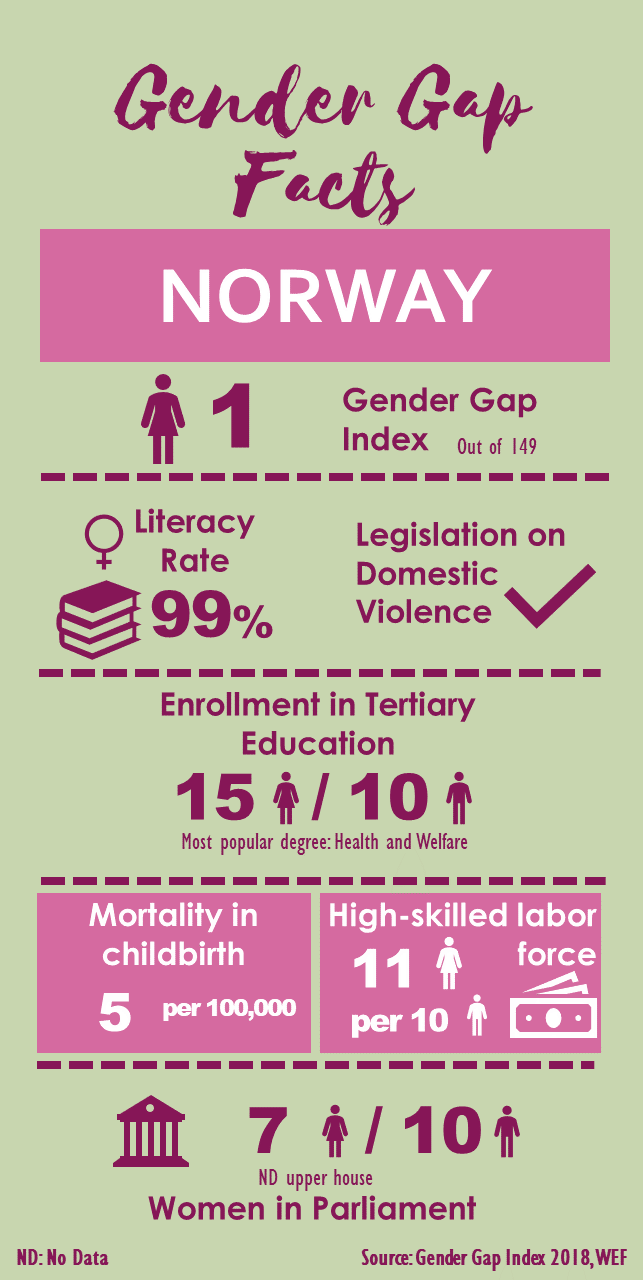 In Norway, the Library Act requires that every municipality has at least one public library. These spaces are key for community-building. Since the early 2000s, the libraries have programs that work with immigrant women. The programs go from kindergarten libraries, language cafés, conversation groups, reading groups, and multicultural libraries. In that way, libraries become a place to integrate women, but also where they can feel at home.
 The Map of Fiction by Women