Solo a Cecilia podía Esmé confiarle a su hija de ese modo. Desde que había empezado otra vez a trabajar en publicidad, una fantasía única y atroz había llegado a reemplazar y concentrar el conjunto de miedos que la enloquecían cuando su hija era bebé. Esmé tenía miedo de que Natalia se cayera por la ventana. (…) En una pesadilla recurrente que la hacía despertarse gritando, volvía del trabajo y se encontraba con un grupo grande de personas (…) Esmé se habría paso entre ellos con esfuerzo, porque no querían separarse para dejarla pasar, aunque tampoco la empujaban. Por fin lograba atisbar qué era lo todos miraban con tanta atención y silencio: en el medio de la muchedumbre, tirada en el suelo, había una calabaza rota y esa calabaza era su hija.
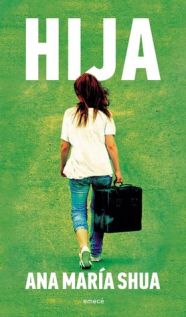 Hija (Daughter) is the story of Natalia a girl born in Buenos Aires in the mid-80s -right after the fall of the dictatorship. She is smart, lively, beautiful, and charming; treats that she displays from a young age. Esme and Guido, Natalia’s parents, are enchanted by her. And she’s also charmed her grandparents, teachers, classmates, and anyone that surrounds her. Soon, however, she learns how easy it is to manipulate people and how much she can gain by deceiving those that surround her. Shua tells the story from Esme’s point of view and how Natalia changes her life: the moment she is ready to have a baby, the pregnancy, the life-work balance, her relationship with Guido, the school-meetings, the parent-meetings, and the mid-of-the-night phone calls.
Shua captures with extreme precision the change of times in the of the century and how that affected the development of a new generation of women. Especially, Natalia’s teen years which are captured in such a realistic way, are fascinating but terrible. Hija is also an accurate depiction of the middle class in Latin America; of family dynamics and the roles within, the expectations and pressure from society and the dealings with a time of crisis. But what makes this book remarkable is its take on motherhood. It is authentic, raw, and full of expectations. I could feel the incredible love accompanied by stress that Esme felt as a new mother, the fear of not having a manual to guide her through every new stage of Natalia’s development, the pressure on Esme from her parents, Natalia’s teachers and other adults on the “right” way to educate her daughter, and the confusion and burden of Esme’s realization that her daughter was not the person she wanted her to be.
For me, Hija might have two weaknesses: the beginning of the book where Shua describes exile and the dictatorship, topics that don’t really relate to the story or the character development of Natalia, and the last chapter, which feels a bit rushed compared to the rest of the book.
The book has a quirk. In between the chapters, there’s the author’s diary. In it, Shua recollects the process of making the novel: where she got the inspiration, her sources, and her expectations (but, there’s something even quirkier: Shua presents a reviewed version of the diary, making it an unreliable source of information). A note, on the first page, reads that the diary is optional and not part of the book. However, it surely is. It complements the story and enhances the reader’s experience. So, don’t skip it!
About Ana María Shua
Ana María Shua was born in Buenos Aires in 1951. She has published over 8o books, her first collection of poems being published when she was 16. Shua’s children books have been a great success in Argentina and Korea and she is considered the queen of Microfiction in the Spanish speaking world.
Other books written by Argentine women:
We only recommend books we’ve read
Which book do you recommend? Please let us know in the comment section!
Argentine initiatives and projects that support and empower girls and women
National Campaign for the Right to a Free, Safe and Legal Abortion
The campaign was launched in 2005 by multiple feminist and women’s groups (as of today more than 300 groups belong to the campaign). Their objective is that sexual and reproductive rights are recognized as basic rights for everyone.
 With the motto “sexual education to decide, contraceptives not to abort, legal abortion not to die” they have collected thousands of signatures, proposed legislation and raised awareness about legal abortion, in a country where almost half a million women have illegal abortions every year.
 The Map of Fiction by Women