I see the northeastern girl looking in the mirror and — a ruffle of the drum — in the mirror appears my weary and unshaven face. We’re that interchangeable. There’s no doubt she’s a physical person. And I’ll venture a fact: she’s never seen herself naked because she was ashamed. Ashamed because she’s modest or because she’s ugly? I also wonder how to cope with facts and facts. Because all of a sudden the figurative fascinated me: I create human action and I tremble.
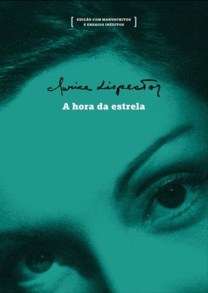 The Hour of the Star is novel to read in one day, nonstop and come back to it for many days afterwards. This was not the case for me because I read it in Portuguese, granted my Portuguese is basic. I had to reread it in Spanish and it was fascinating. I think the first and most visible aspect of the novel, aside from the multiple titles (including “It’s All My Fault”, “Let Her Deal With It”, or “The Right to Scream”) that makes it unique is the point of view. The story is told by a third person – a man that readers don’t know and don’t understand the relationship to the main character-. He starts questioning the universe and zooms readers into position, face to face with Macabea, the northeastern girl. He continues telling her part of the story, the one that correspond to the specific time frame he knows and sees her. It is as if he knows every detail of her life, it could seem that he spies her, but she knows nothing of him.
Although Lispector excels in the physical descriptions of Macabea, the places, Olímpico and the rest of the characters, she masters the way of including sounds throughout the novel, the ever-sounding ruffle of the drum. She also creates a dense story in just a few pages, with short, yet precise descriptions for readers to get a gist of the other characters and understand Macabea’s situation, who even with a job cannot afford to have a life today and will not be able to do so in the future. Lispector manages to exemplify the terrible and so-called life of a woman in northeast Brazil that could resonate along women of the region even today.
The Hour of the Star was Lispector’s last novel and although there is probably a million reviews written about it, I was thrilled to read it and review it. It is a short novel that encompasses many layers of human existence, breaks the “laws” of literature by including a narrator that speaks directly to the readers but indirectly to the main character, and leaves readers heartbroken. Even though I did not expect the ending, it could not have been any other way and it is probably one of the best, most terrible endings any novel could have. I will be, most definitely, reading more of Lispector in the near future.
About Clarice Lispector
Lispector was born in 1920 in Chechelnyk, Ukraine and was forced to move to Brazil in 1922 due to racial discrimination. The name she was given at birth was Chaya, but she had to change it to Clarice once she got to Brazil. Even though she studied Law, her passion were the arts and when she was only 24 years old she published her first novel “Near to the Wild Heart.” It is said that she wrote “The Hour of the Star” on cigarette boxes and the back of checks. She is the great Brazilian author of the second half of the 20th Century.
Other books written by Brazilian women
We only recommend books we’ve read
Crow blue – Adriana Lisboa (read by Ceci)
Which book do you recommend? Please let us know in the comment section!
Brazilian initiatives and projects that support and empower girls and women
CEPIA
 CEPIA was created in 1990 to support, protect and increase women’s rights and human rights in general in Brazil. They do so by creating awareness about women’s health, reproductive rights, violence, access to justice and empowerment. The organization not only does research and applied research, it also organizes seminars, works along other non profits and civil organizations, partners with health experts and health officials, and drafts public policies that promote women’s rights and empowerment. They hold frequent workshops where they use a train-the-trainer approach so that their workshops reach more women even if they they don’t have access to CEPIA.
 The Map of Fiction by Women