Babirye hesitated. Here was the moment. Kintu, the family, Mayirika, and even Buddu Province hung on this moment: she could hold it or she could let everything crash. She had been Nnakato before. If Kintu – the only person to tell them apart – doubted then no one could be sure. All she had to was bury childless Babirye and resurrect Nnakato and life would go back to normal. Finally, Kintu would worship her.
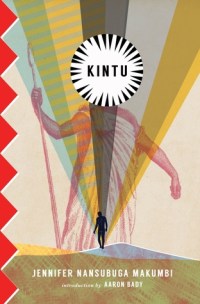 I will definitely come back to Kintu again at some point in my life, even if I only read one part, just to read Makumbi’s beautiful narrative and blissful storytelling. Every paragraph is embedded with the tradition of oral history and its transports readers back to 18th Century or 2004 Uganda. The structure of the novel is straight forward, it consists of six parts, each corresponding to a distant family member of the ancient Kintu family and a homecoming in the end. Each part introduces the particular family member it will be about and reflects a different aspect of Uganda, both past and present.
At first, I was intimidated by the plot- it starts with a mob killing Kintu Kamu in 2004, a character readers know nothing about – but then it tells the story of Kintu Kidda. Set in 1750, a story of love, duty and tradition about Uganda’s past that culminates in a family curse that hunts the family for centuries. The first part gives readers a thorough glimpse of Uganda’s power structures, rooted ways of living and the first family members whose personalities suddenly exist in future family members. After the first part, the novel occurs at different moments of 2004, always coming back to the fate Kintu Kamu’s dead body. Each part shows a different perspective of Uganda. Magic and curses – swarms of bees and undead twins tormenting the living. Each character is given a personality with the descriptions it beholds, and no character has the same life just the same last name. For me, in this first reading, I was most touched by Suubi, the second part and only women who has a part. But don’t fret, the novel has very strong female characters that shape the plot and define the ending.
Kintu is a novel about Uganda, it was refreshing to read a novel that stays in the country it is from, even if some characters study abroad, the plot is not about emigration or life as an immigrant. It is about life in Uganda for Ugandans with Ugandan names. Even the title portrays this, as in Ugandan mythology, Kintu is the name of the first person on Earth.
About Jennifer Nansubuga Makumbi
When Makumbi finished Kintu she had a hard time having it published. It was actually first published in Kenya, however soon after people started reading and loving it, it was published in the UK. It won the Kwani? Manuscript Project award and the Commonwealth Short Story Prize, and was long listed for Etisalat Prize for African Fiction (the same year the We Need New Names won). Makumbi was born in Kampala, Uganda and currently lives in Manchester. She has a PhD in Creative Writing.
Other works written by Ugandan women
We only recommend books we’ve read.
Which book do you recommend? Please let us know in the comment section!
Ugandan initiatives and projects that support and empower girls and women
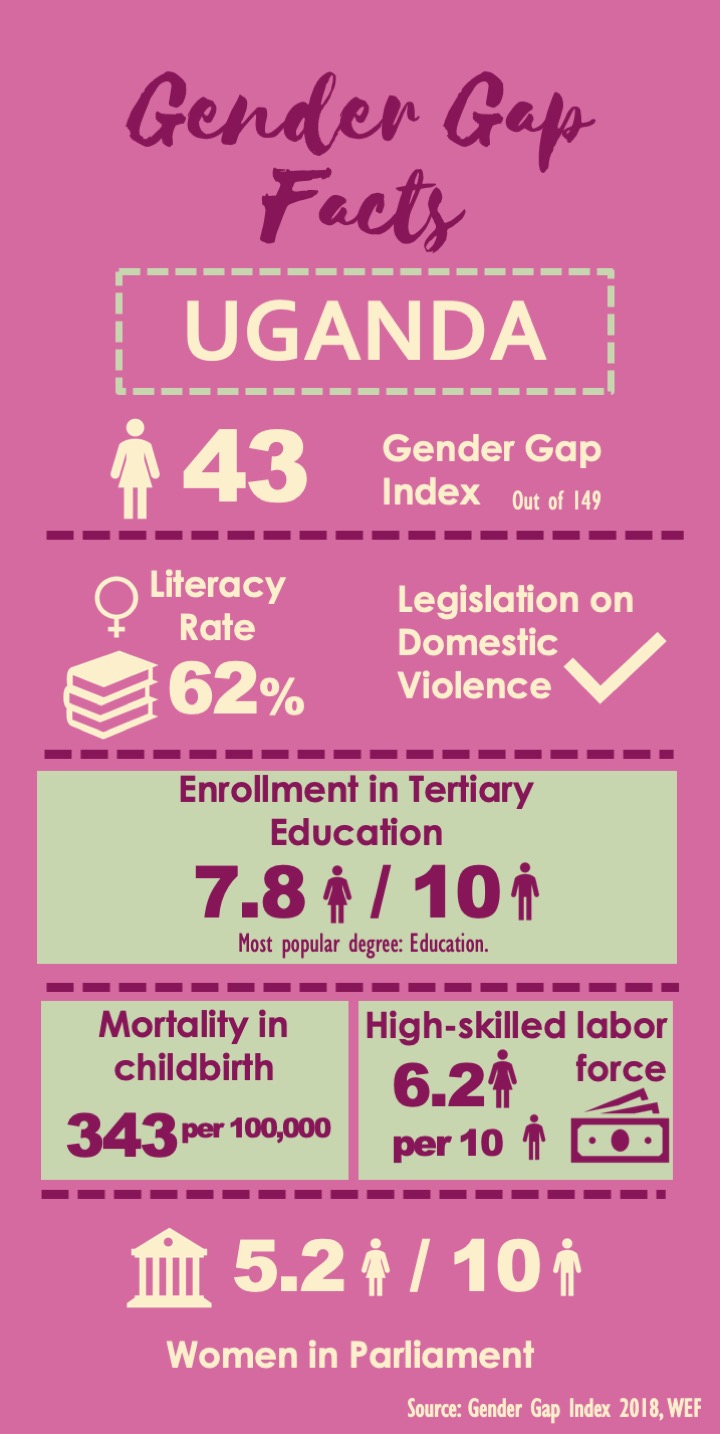
This organization was created with the vision to reduce the gender inequalities of girls in Uganda in order for them to thrive and meet their future potential. They strive to promote leadership skills, educate about sexual and reproductive health, and enhance skills development. Their three successful programs, Adolescent Girl Program, Ni-Yetu Youth Program and Young Women’s Economic Empowerment Program, each serve a different purpose to empower girls to demand more and reduce gender inequalities. Girl Up Ugangda is part of Michelle Obama’s Global Girls Alliance.
 The Map of Fiction by Women
Gracias por presentarnos una narrativa, amena, interesante y enriquecedora. No paren! Sigan, sigan
LikeLiked by 1 person