Love? … Love? … Love is not safe, my lady silk, love is dangerous. It is deceitfully sweet like the wine from a fresh palm tree at dawn. Love is fine for singing about and love songs are good to listen to, sometimes even to dance to. But when we need to count on human strength, and when we have to count pennies for food for our stomachs and clothes for our backs, love is nothing. Ah my lady, the last man any women should think of marrying is the man she loves.
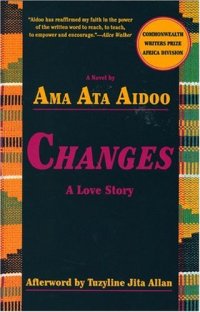 Contrary to its title, Changes: A Love Story is not about love, at least not according to me. Changes is the story of a woman living in Accra where she has to make decisions in a zero sum game. In other words, the benefit from one decision directly affects or subtracts the other decision; if she decides to study she will not marry at the desired age, if she wants to get a career, it’s probable that her husband will cheat on her or her children will not love her as much, and so on. Aidoo begins the story with a meet-cute, exciting the reader about the first feelings of a crush, the first glances and energy between the two soon-to-be lovers. Her voice is feminine, modern and assertive. Esi, the main character, is in control of the situation. She feels Ali’s eyes following her body, but resists temptation feeling empowered because she is going home to her husband and daughter. The next morning she lives through what she calls “domestic rape” and everything changes.
Nevertheless, Esi, makes a difficult decision and feels empowered because she has a job, a daughter, a house, and a car. All the other women in the story do not share this feeling of empowerment. Aidoo uses the female characters to exemplify the cultural beliefs and points of view that sustain that Esi should have not taken that decision. Esi’s mother and grandmother constantly remind her the duty she has to fulfill as a wife (never understanding why she had only one child) and as a mother (Esi soon realizes she will never have the relationship her mother and grandmother have with neither her mother or daughter). Opokuya, Esi’s best friend, holds on to her husband despite her fights and suspicions that he cheats on her. She supports her friend suppressing her jealousy by telling herself she is a first wife, contrary to Esi. And finally, Ali’s first wife, who sacrifices her education and career for him without question, yet always regretting it. The men, on the other hand, have only one goal – to maintain their mental and economic sanity while having multiple wives.
Through a strong and feminine voice, Aidoo writes not about love, but about the consequences of love. As the story unfolds, Esi’s empowerment and assertiveness gets lost in doubt. Even though the story takes place in Accra, concerning Ghanian women, this is an ongoing reality and it is applicable to women all over the world. Women who face the reality that owning a car, having a degree or a decent job does not guarantee freedom of choice because the cultural and social context decides for them. And still, despite this reality, women do value love, so much, that they accept the consequences of love-decisions and the societal norms they entail.
About Ama Ata Aidoo
Ama Ata Aidoo writes about women, specifically the stereotypical African woman, the challenges she faces and ways she can break social norms. She was born in Saltpond, Gold Coast which is now Ghana. She studied English in the University of Ghana and Creative Writing in Stanford University. After her studies, she returned to Ghana and served as Minister of Education, a position in which she did not last long due to controversies with the government. In 1992, she won the Commonwealth Writer’s Prize for Best Book in Africa for her novel “Changes: A Love Story.”
Other books written by Ghanaian women
We only recommend books we’ve read
Homegoing – Yaa Gyasi (read by Ceci and Angélica)
Ghanaian initiatives and projects that support and empower girls and women
Alliance for African Women Initiative
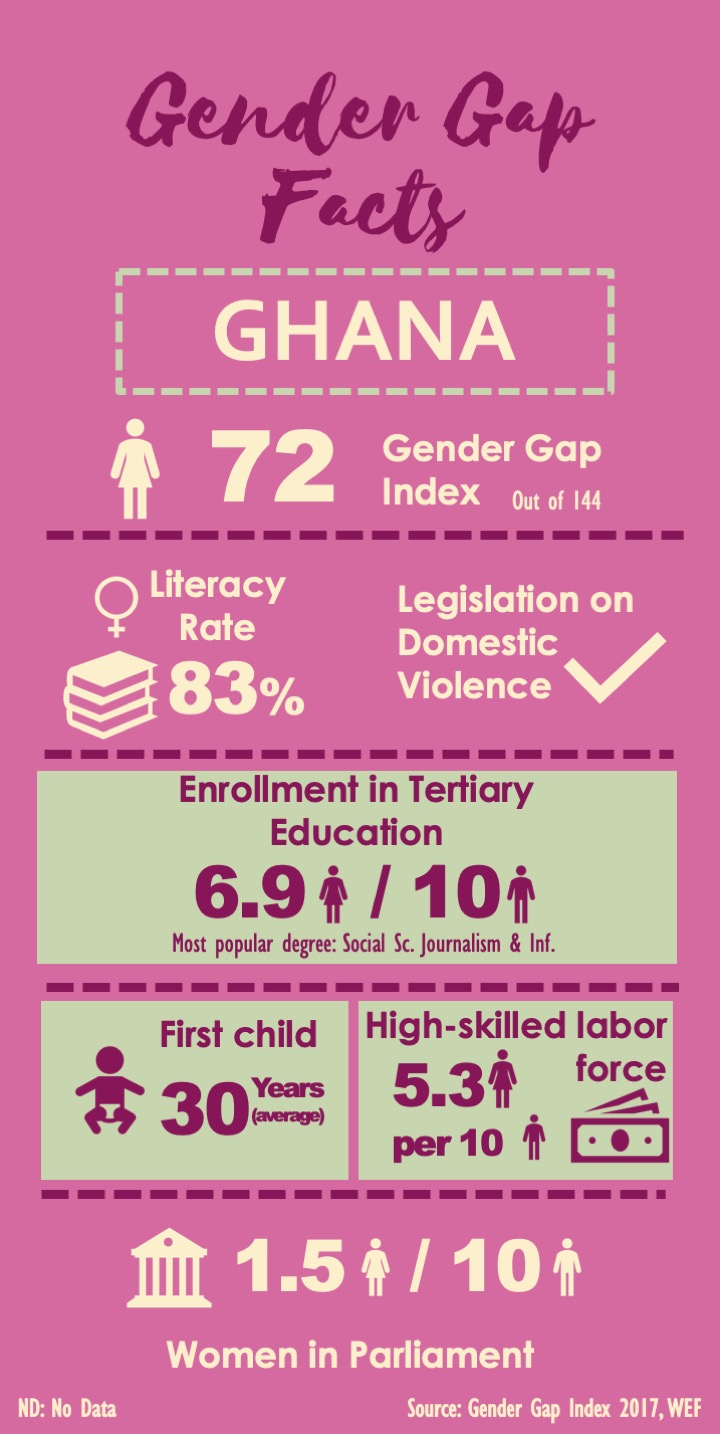 The Alliance for African Women Initiative is a grassroots organization that strives to reduce the gender gap and empower Ghanaian women and children. They work in four projects that aim to reduce inequalities in different aspects. The Livelihood project gives women entrepreneurs tools and skills to strengthen their businesses. The ECCACHILD project protects children from marginalized communities by giving them education and health services. The Empowering Girls project targets adolescent girls in school and educates them about sexual health to ensure their attendance. Finally, the community outreach project narrows the distance of health services and brings them to marginalized communities. This organization recently starting organizing participatory citizen monitoring to evaluate public policies.
 The Map of Fiction by Women