“¿Qué hago contando cuentos ajenos? Se supone que debo contar el mío. Sin embargo, a veces pienso que la historia de una siempre es parte de la historia de otras.”
“Why I am telling you stories of others? I’m supposed to be telling my story, however, sometimes I think that the story of a woman is always part of the story of other women.”
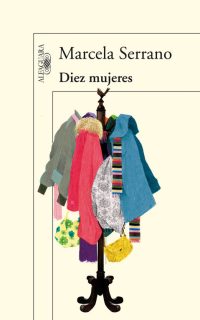 I chose “Ten Women” because I wanted to read a woman writing about women (the last two books I read “The Hamilton Case” and “Los Divinos” follow a very masculine voice). The novel, as the title expresses, is about ten women and Natasha, their psychologist, who invites them to a retreat. Each chapter, except for the prologue and the last one, is told in the first person, the patients are telling their stories to each other. They do not necessarily mention the exact reason why they started to see Natasha, but the reader can clearly understand why they are there and how their life experiences have transformed them. Although the stories of each woman are thoroughly written, and as a reader you can feel them closely and intimately, in the end, it feels as though you are reading separate stories of Chilean women from different backgrounds. I was expecting their stories to start weaving together, but it’s just that — life stories.
The language, however, is exquisite (at least for me). Having recently met many Chileans, it was extremely refreshing to read colloquial Chilean Spanish and imagine my friends telling me stories. There are a few hilarious episodes when a character is describing the posh and snobby upper-class Chilean girls and their extravagant behavior in the “real” world. Serrano also changes the patient’s voice depending on the social class she belongs to. This usage of language allows each woman to have her own voice and guides the reader through the different stories. Nonetheless, with some women, I still felt they did not have a distinctive tone, especially the younger women.
I enjoyed reading about Chilean women having read other books with a similar format (“Naondel” and “Reading Lolita in Tehran”). The literary allusions throughout the entire novel are on point and masterly chosen. When reaching the end, I got excited about reading Ana Rosa’s chapter, a woman my age. When I finished, I wished I had not read it (you’ll see why). My end feeling is that the novel is a collection of stories about women of different backgrounds and different wounds to heal. And I was left wondering why Serrano did not want the readers to hear Natasha’s voice?
About Marcela Serrano
Marcela Serrano was born in Santiago, Chile in 1951. After working in visual arts for a few years, she started writing at the age of 34. In 1991, she published her award-winning first novel, “Nosotras que nos queremos tanto.” She usually writes about women and the condition of being a woman in her country. She wrote “Ten Women” in 2011.
Other works by Chilean authors we recommend
We just recommend books we’ve read
City of the Beasts – Isabel Allende (Read by Ceci)
Which book do you recommend? Please let us know in the comment section!
Chilean initiatives and projects that support and empower girls and women
 This organization is a community of women entrepreneurs that work together to make Chile and Latin America a better place for women and girls. They create networks, strategic alliances, and spaces for women to come together, grow professionally, solve problems and help foundations and nonprofits that empower Chilean girls and women. Through activities such as mentorships, capacity-building workshops, roundtables and a media platform, they have influenced over 20,000 Chilean women. Some of the organizations they have supported include Laboratoria, Soy Más and Fundación Emilia.
 The Map of Fiction by Women